What is Machine Learning?
Machine learning (ML) is one of the best-known subcategories of artificial intelligence (AI). This complex and multidisciplinary field can require training in programming languages like Python, databases like MySQL, and natural language processing (NLP). Common careers that require machine learning skills include Machine Learning Engineers, Data Scientists, and Business Intelligence (BI) Analysts.

Machine learning is often associated with Python programming and data science. Supervised, unsupervised, and reinforcement learning are the top three models of ML algorithms. Popular uses of ML in daily activities include voice recognition tools like Siri, recommendation lists from Amazon or Netflix, and user engagement icons on platforms like Instagram and TikTok.
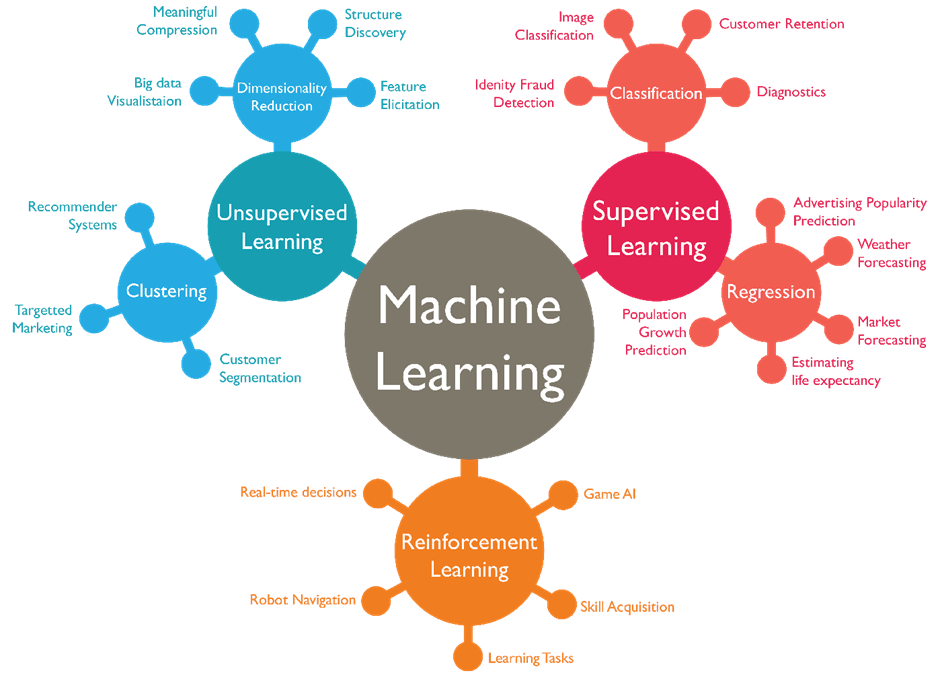
Types Of Machine Learning
There are mainly three types of Machine Learning,
- Supervised Learning
- Unsupervised Learning
- Reinforcement Learning
Stabilize Your Future
Machine learning jobs are on the rise. According to Glassdoor, Machine Learning Engineer ranked among the Top 10 Best Jobs in America for 2022. But it doesn’t stop there: related positions comprise most of the list, including roles like Data Scientist, Data Engineer, and Enterprise Architect. The need for targeted data collection and analysis has never been greater.
Numerous industries today stand in dire need of more workers. The labour shortage has led directly to an increase in the use of artificial intelligence, especially machine learning. Companies now use ML to improve employee retention and determine the best options for remote workers to be productive. In addition, ML algorithms can help employers relieve workers of repetitive tasks, particularly in accounting and routine customer service inquiries, and even eliminate pesky problems like spam emails at work. Stabilizing your future in a world dominated by machine learning algorithms might sound tricky, but it doesn’t have to be. Consider training for a position with a title like one of the following:
- Data Scientist
- Natural Language Processing (NLP) Scientist
- Database Engineer
- Machine Learning Engineer
- Artificial Intelligence (AI) Engineer
- Data Architect
- Business Intelligence (BI) Analyst
- Cyber security Analyst
- Robotics Engineer
With so many specializations, it may seem overwhelming. However, once you start learning ML algorithms, you’ll soon see how many opportunities require skills in this exciting field.
How businesses are using machine learning
Machine learning is the core of some companies’ business models, like in the case Netflix of Suggestion algorithm or SEO. Other companies are engaging deeply with machine learning, though it’s not their main business proposition.
Others are still trying to determine how to use machine learning in a beneficial way. “In my opinion, one of the hardest problems in machine learning is figuring out what problems I can solve with machine learning,” Shulman said. “There’s still a gap in the understanding.”
In a 2018 newspaper, researchers from the MIT Initiative on the Digital Economy outlined a 21-question rubric to determine whether a task is suitable for machine learning. The researchers found that no occupation will be untouched by machine learning, but no occupation is likely to be completely taken over by it. The way to unleash machine learning success, the researchers found, was to reorganize jobs into discrete tasks, some which can be done by machine learning, and others that require a human.
Companies are already using machine learning in several ways, including:
Recommendation algorithms. The recommendation engines behind Netflix and YouTube suggestions, what information appears on your Facebook feed, and product recommendations are fuelled by machine learning.
Image analysis and object detection. Machine learning can analyze images for different information, like learning to identify people and tell them apart — though facial recognition algorithms are controversial. Business uses for this vary. Shulman noted that hedge funds famously use machine learning to analyse the number of cars in parking lots, which helps them learn how companies are performing and make good bets.
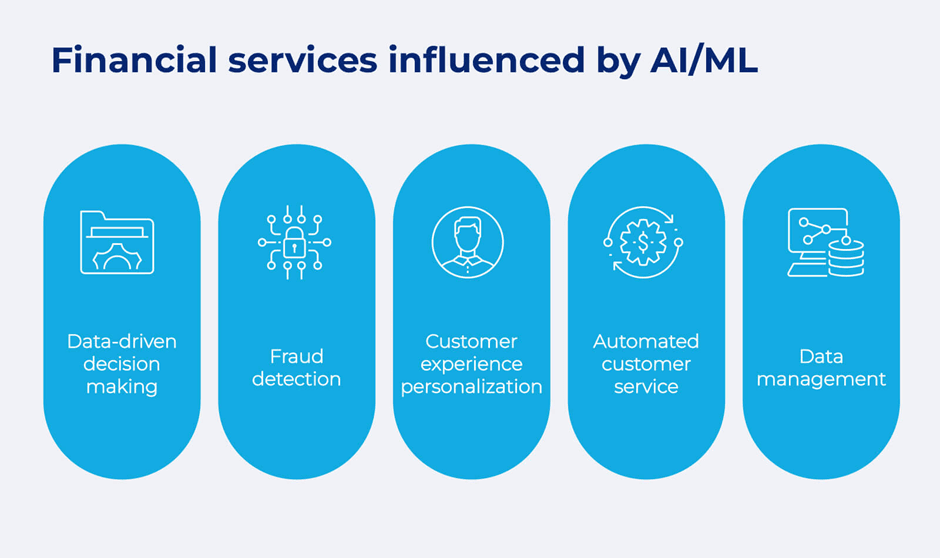
Fraud detection. Machines can analyze patterns, like how someone normally spends or where they normally shop, to identify potentially fraudulent credit card transactions,log-in attempts, or spam emails.
Automatic helplines or chatbots. Many companies are deploying online chatbots, in which customers or clients don’t speak to humans, but instead interact with a machine. These algorithms use machine learning and natural language processing, with the bots learning from records of past conversations to come up with appropriate responses.
Self-driving cars. Much of the technology behind self-driving cars is based on machine learning, deep learning in particulars.
Medical imaging and diagnostics. Machine learning programs can be trained to examine medical images or other information and look for certain markers of illness, like a tool that can predict cancer risk based on a mammogram.
Do follow links for more Contents :https://athenas.co.in/cybercrime-how-to-secure-latest-cyber-attacks- 2024/ https://www.geeksforgeeks.org/machine-learning/